

blog spot
THE
health hub
A collection of helpful articles & information to spread awareness through education from our staff to you

CATEGORY
5/01/2026
POSTED
Seasonal allergies are one of the most common conditions we see in children — especially this time of year.
Across our clinics in Aldie (Stone Ridge), Manassas, and Winchester, we’re seeing more kids come in with congestion, sneezing, itchy eyes, and symptoms that seem to linger longer than expected.
For many families, it can feel confusing. Symptoms come and go, don’t fully resolve, and often look like a cold.To help you better understand what’s going on, here are five things many parents don’t realize about kids’ seasonal allergies.
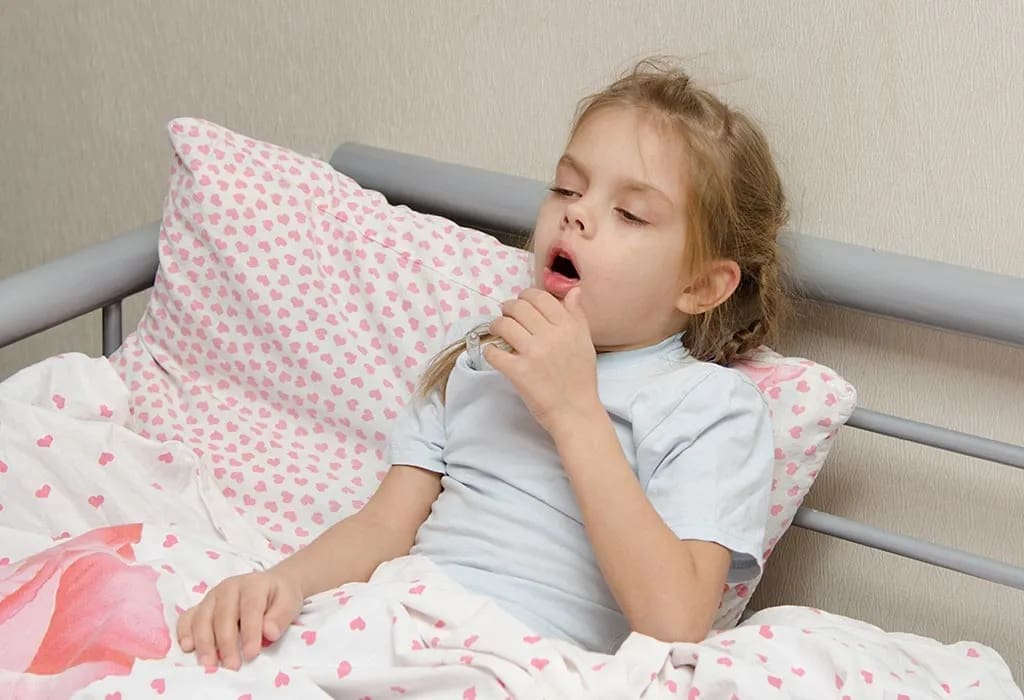
1. Allergies can trigger asthma flare-ups
If your child has asthma, there’s a strong chance that allergies are playing a role.
In fact, many children with asthma also have environmental allergies that can trigger symptoms like coughing, wheezing, and shortness of breath. This is especially common during seasonal changes when pollen levels are higher.
That’s why breathing symptoms may seem worse when allergy symptoms are also present — and why early management matters.
2. Waiting for symptoms to start can make them harder to control
Many allergy treatments are designed to prevent symptoms, not just treat them after they begin.
If your child tends to have seasonal allergies every year, starting treatment early — before symptoms peak — can help reduce how severe they become.
This is something many parents don’t realize until symptoms are already in full swing.
3. Not all home remedies work the way you think
You may have heard that local honey can help with allergies.
While honey is safe for children over 1 year old and can soothe a cough, there’s no consistent evidence that it prevents or treats seasonal allergies.
It’s fine to use as a comfort measure — just not as a primary solution for allergy symptoms.
4. Pollen counts don’t tell the whole story
Checking the pollen count can be helpful, but it doesn’t always explain your child’s symptoms.
Different children react to different types of pollen — like tree, grass, or weed pollen — and most reports only show a general overall level.
That’s why some kids may have significant symptoms even when the pollen count doesn’t seem especially high.
5. There are more treatment options than you might think
For some children — especially those with persistent or more severe symptoms — there are additional options beyond basic allergy medications.
These may include targeted treatments or allergy-specific therapies, depending on your child’s age, symptoms, and triggers.
The right approach varies for each child, which is why getting the right evaluation can make a difference.
What this means for parents
If your child’s symptoms are lingering, worsening, or not responding the way you expected, you’re not alone.
We’re seeing a lot of this right now.
Sometimes it’s straightforward seasonal allergies. Other times, symptoms may overlap with other conditions.
Either way, getting clarity can help guide the right next steps and help your child feel better sooner.
Allergy care at Night Watch Urgent Care
At Night Watch Urgent Care, we evaluate and treat seasonal allergies and related symptoms in children across Northern Virginia.
We help determine what’s causing your child’s symptoms and recommend the next steps — whether that’s supportive care, symptom management, or further evaluation.
We’re open every day, including evenings and weekends, so you don’t have to wait while symptoms linger.
Seasonal allergies can be frustrating — especially when symptoms don’t go away as expected.
If you’re unsure what’s normal or what to do next, it’s always okay to have your child evaluated.
CATEGORY
4/19/2026
POSTED
A quick update from our clinics
Allergies are everywhere right now.
Over the past week, we’ve been seeing a steady flow of kids coming into our clinics in Aldie (Stone Ridge), Manassas, and Winchester with the same pattern of symptoms.
It’s not the typical “gets better in a few days” kind of illness.
It lingers.
And that’s what’s making it confusing for a lot of families.
What we’re seeing in clinic
Most kids we’re seeing right now are coming in with:
- Congestion that won’t go away
- Frequent sneezing
- Runny nose that keeps coming back
- Itchy or watery eyes
- Red, irritated eyes (often mistaken for pink eye)
- A cough that’s worse at night
For many parents, it starts off feeling like a simple cold. But after a few days, it doesn’t improve the way they expected.
Instead of getting better, symptoms just stay — or fluctuate throughout the day.
That’s been one of the biggest patterns we’re seeing.
Why symptoms are worse right now
This is very typical for this time of year in Northern Virginia.
Pollen levels are rising, the weather keeps shifting, and allergens are more active — especially outdoors.
Even children who don’t usually have strong allergies can start showing symptoms when exposure increases.
And because allergy symptoms can overlap with colds, it’s easy to misread what’s going on.
When it’s more likely allergies
There’s no single symptom that confirms it, but there are a few patterns we’re seeing consistently right now.
Symptoms that linger beyond a few days, come and go, or seem worse in the morning or after being outside are often allergy-related.
Itching is another big clue — especially itchy eyes, nose, or throat — which isn’t as common with viral illnesses.Most of the time, the discharge is also clear rather than thick, and kids may seem uncomfortable but otherwise okay.
What to do next
Not every case needs immediate treatment, but getting clarity can help a lot.
If your child’s symptoms aren’t improving, are affecting sleep, or just don’t feel typical for them, it’s reasonable to have them evaluated.
Sometimes it’s simply confirming that it’s allergies and guiding you on what will help. Other times, it helps rule out something else.
Either way, it takes the guesswork out of it.
Allergy care at Night Watch Urgent Care
At Night Watch Urgent Care, we’re seeing and treating seasonal allergies in children every day right now.
We help families understand what’s causing their child’s symptoms and recommend the right next steps — whether that’s supportive care, allergy management, or further evaluation.We’re open every day, including evenings and weekends, so you don’t have to wait while symptoms linger.
CATEGORY
2/22/2026
POSTED
When your child is sick or hurt, the best place to go depends on two things: how severe the symptoms are and how fast your child needs to be evaluated. If you’re seeing emergency warning signs (trouble breathing, severe allergic reaction, seizure, or a child who is hard to wake), skip the debate and go straight to the ER or call your local emergency number.
Below is a practical, parent-friendly guide to help you decide.
Choose the ER if your child may be in danger right now or could worsen quickly.
Choose Urgent Care if your child needs same-day evaluation for a non-life-threatening problem (especially when your pediatrician is closed or can’t see you soon).
Choose the Pediatrician for routine care, ongoing concerns, and problems that can safely wait for an office visit.
If you’re unsure, many urgent care clinics also offer telemedicine or nurse/triage guidance—but if your gut says “this is an emergency,” trust that and go to the ER.
Go to the ER now (or call emergency services) if…
These are red-flag symptoms that should be treated as emergencies:
- Trouble breathing, fast breathing, ribs pulling in with breaths, blue/gray lips or face.
- Severe allergic reaction: facial/lip/tongue swelling, trouble breathing, widespread hives with vomiting or dizziness.
- Seizure, fainting, or your child is very hard to wake/confused.
- Head injury with loss of consciousness, repeated vomiting, worsening headache, or unusual behavior.
- Severe bleeding that won’t stop with firm pressure.
- Suspected broken bone with deformity (bone looks out of place), severe pain, or numbness/tingling.
- Severe dehydration: no urine for 8–12 hours, very dry mouth, no tears, lethargy, or sunken eyes (especially in babies).
- Fever in a baby under 3 months (or any infant who looks very ill).
- Poisoning/ingestion (medications, chemicals, unknown substances), or concern for overdose.
- Severe abdominal pain, especially with a hard belly, persistent vomiting, or pain in the lower right abdomen.
- Any situation where you feel your child is not safe to wait.
Urgent Care is usually best for…
Urgent care is a strong option when your child needs prompt care but is stable.
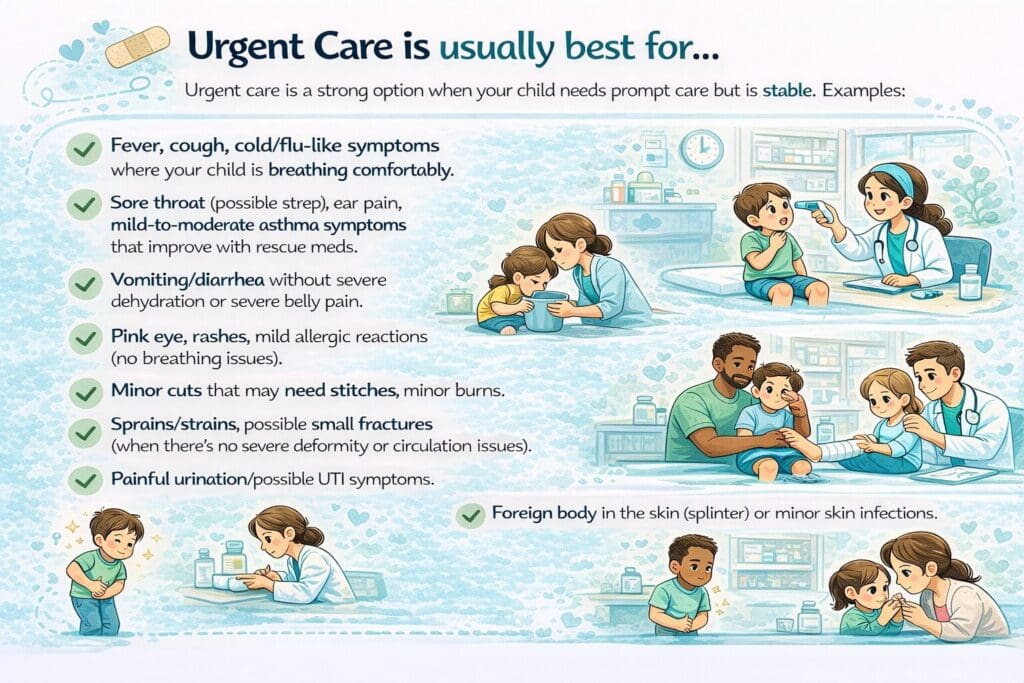
Why parents choose urgent care: Urgent care is a go-to option when you need your child seen the same day but your pediatrician is fully booked. Many urgent care clinics can also provide on-site testing, like rapid strep, flu, or COVID tests, and may offer X-rays, which can speed up answers and treatment decisions. It’s also especially helpful during evenings and weekends when your pediatrician’s office is closed, so you’re not forced to wait until the next business day.
Your Pediatrician is best for… Your child’s pediatrician should be your home base for routine and long-term care, including well visits, vaccines, and growth and developmental check-ins. They’re also the best fit for ongoing or recurring concerns, like asthma management plans, eczema, constipation, and repeated ear infections, because they can follow patterns over time and adjust care as your child grows. Pediatricians are ideal for behavior and sleep concerns, school-related issues, anxiety, and ADHD evaluations, and they’re a great choice when symptoms are mild, improving, and safe to wait for an appointment. They should also handle follow-ups after urgent care or ER visits to make sure your child is recovering well and to coordinate next steps if anything needs closer monitoring. Why it matters: your pediatrician knows your child’s history, tracks progress across multiple visits, and can coordinate referrals to specialists when needed.
Common scenarios (where to go)
1) Ear pain + low fever
- Usually urgent care or pediatrician (same/next day).
- ER only if severe swelling behind the ear, stiff neck, extreme lethargy, or severe dehydration.
2) Sore throat + fever
- Urgent care or pediatrician for strep testing and guidance.
- ER if trouble breathing, drooling with inability to swallow, or signs of dehydration.
3) Asthma/wheezing
- Urgent care if mild–moderate and improving with rescue inhaler.
- ER if your child is struggling to breathe, can’t speak in full sentences (age-appropriate), lips look bluish, or rescue meds aren’t helping.
4) Cut on the face
- Urgent care is often ideal, especially if it needs stitches and it’s within a few hours of the injury.
- ER if bleeding won’t stop, the wound is deep with visible fat/muscle, or there’s concern for a head injury.
5) Head bump after a fall
- Urgent care if your child is acting normal and symptoms are mild.
- ER for loss of consciousness, repeated vomiting, worsening headache, confusion, seizure, or very abnormal sleepiness.
If you’re stuck between urgent care and the ER, choose the safer option—especially for breathing problems, dehydration, head injuries, or very young infants. And if you’re deciding between urgent care and the pediatrician, urgent care makes sense when you can’t get a timely appointment or symptoms are worsening.
Need care today? Walk in to Night Watch Urgent Care in Manassas at 11700 Sudley Manor Dr, Manassas, VA 20109, or call (703) 589-9695 to check wait times and options.