

blog spot
THE
health hub
A collection of helpful articles & information to spread awareness through education from our staff to you

CATEGORY
6/18/2026
POSTED
Fall sports tryouts feel far away in June. They are not. And every year, the same thing happens. Parents wait until the last week of August to schedule a sports physical, only to find that every pediatrician in Northern Virginia is booked solid and every urgent care has a line out the door.
We want to help you avoid that this year.
What Is a Sports Physical?
A sports physical, sometimes called a pre-participation physical evaluation, is a comprehensive examination designed to make sure your child is healthy and ready to safely participate in organized sports.
It is required by most schools, camps, and athletic leagues across Virginia before a child can join a team, attend tryouts, or step onto the field for the season.
At Night Watch, our sports physicals are built around one goal: confirming your child is ready, without the wait or the runaround that comes with scheduling through a typical pediatrician’s office.
Why Timing Matters
Most schools and athletic programs require a sports physical to be completed within a certain window before the season starts, often anywhere from a few months to a year, depending on the sport and the district.
The problem is that everyone tends to wait until the same time. Late summer becomes a bottleneck. Pediatrician offices get backed up. Forms do not get signed in time. Kids miss the first few days of practice, or worse, get held out of tryouts altogether.
Coming in during June or July, while the season feels far off, means you get seen quickly and walk out with the form completed, no stress, no scrambling.
What Happens During the Visit
When you walk in for a sports physical at Night Watch, our provider will review your child’s medical history, including any past injuries, surgeries, or family health conditions that could be relevant to athletic participation.
From there, the physical exam typically includes a general health assessment to make sure your child is cleared for the physical demands of their sport.
Our goal is to be thorough without making the visit feel like a hurdle. We want your child walking out the door cleared and confident, not anxious about whether they passed some kind of test.
No Appointment Needed
This is one of the biggest differences between Night Watch and a traditional pediatrician’s office. You do not need to schedule weeks in advance. You do not need to take a half day off work for an 11am slot that was the only one available.
Walk in any day at any of our three Northern Virginia locations. We will get your child seen, evaluated, and on their way with a completed form, same visit.
Whether It Is For
| A fall sports try out A summer camp that requires a physical before drop-off A travel team with a registration deadline Any organized activity that asks for medical clearance before participation |
If your child needs the form filled out, we can help.
Why Families Choose Night Watch for This
We know plenty of families in Northern Virginia who have a long-standing relationship with their pediatrician and prefer to handle physicals there when there is time to plan ahead. We respect that completely.
But for families who are short on time, dealing with a tight deadline, or just need it done without the back-and-forth of scheduling, Night Watch is built for exactly that moment. Extended hours, walk-in access, and a team that treats your child like one of our own.
Do Not Wait Until the Rush
Here is our honest advice. If your child plays a fall sport, needs a camp physical, or is joining a new team this year, come in now while the season still feels far away. You will thank yourself in August when everyone else is scrambling and your form is already done.
Walk in any day. No appointment needed. We are open late every weekday and every weekend across all three Northern Virginia locations.
CATEGORY
6/14/2026
POSTED
Night Watch Urgent Care | Pediatric Health Blog | June 2026 Locations: Manassas | Winchester | Aldie / Stone Ridge, Northern Virginia
Summer sports season is here. And with it comes the inevitable sprains, twists, and falls that every active kid experiences at some point.
When your child gets hurt on the field or the court, the first few minutes matter. Knowing what to do — and what not to do — can make a real difference in how quickly they recover and whether a small injury turns into a bigger problem.
The RICE method is the first thing every sports parent should know.

What Is the RICE Method?
RICE stands for Rest, Ice, Compression, and Elevation. It is the standard first response for soft tissue injuries like sprains, strains, and minor swelling in kids and adults.
It is not a replacement for medical evaluation. It is what you do in the first hour while you figure out whether your child needs to be seen.
R: Rest
The moment your child gets hurt, stop the activity.
This sounds obvious, but it is one of the steps parents and coaches most often skip. Kids want to keep playing. Coaches do not want to pull a key player. And in the heat of a game or practice, it is easy to convince yourself that walking it off will help.
It will not.
Continuing to put stress on an injured joint or muscle increases swelling, can turn a minor injury into a more serious one, and in kids, risks damage to growth plates that can affect long-term bone development.
When in doubt, sit them out. No game is worth a serious injury.
I: Ice
Ice reduces swelling and numbs pain. Used correctly, it is one of the most effective tools in the first 24 to 48 hours after an injury.
Used incorrectly, it can make things worse.
The most common mistake parents make is pressing an ice pack directly onto the skin. This can cause ice burns, damage the surface skin, and actually restrict blood flow in a way that slows healing down.
Always wrap the ice pack in a cloth or towel before applying it.
Apply for 15 to 20 minutes at a time. Then remove it for at least 20 minutes before reapplying. Repeat this cycle for the first few hours after the injury.
Never leave ice on while your child is sleeping, distracted, or unable to tell you if it is too cold.
C: Compression
Wrapping the injured area with an elastic bandage helps control swelling and provides gentle support to the joint.
The wrap should be snug but not tight. You should be able to slip two fingers underneath it. If the skin around the bandage looks pale, feels numb, or your child says it is tingling, the wrap is too tight. Loosen it immediately.
For ankle injuries, wrap from the toes upward. This helps prevent fluid from pooling in the foot below the injury site.
E: Elevation
Raising the injured limb above the level of the heart uses gravity to reduce swelling and improve circulation away from the injury site.
For a leg or ankle injury, have your child lie down and prop the leg up on a pillow or two. For a wrist or arm injury, keep the arm raised above shoulder height as much as possible.
The more consistently you can maintain elevation in the first few hours, the more effectively you will control swelling.
What RICE Does Not Tell You
RICE is a first response. It is not a diagnosis.
Here is what most parents do not know heading into summer sports season. A sprain and a fracture can feel exactly the same in the first hour after an injury. Both cause pain. Both cause swelling. Both cause bruising. Your child may be able to put some weight on a fractured bone. And a bad sprain can be just as painful as a break.
In children, the situation is even more nuanced. Kids have growth plates near the ends of their developing bones. These are areas of softer, cartilage-like tissue that are more vulnerable to injury than the hardened bone of adults. A force that would cause a sprain in an adult can sometimes fracture a growth plate in a child.
Growth plate injuries that go undiagnosed and untreated can affect how the bone develops long term.
The only way to know whether you are dealing with a sprain or a fracture is an X-ray.
When to Come In
Start RICE right away. Then assess how your child is doing over the next 30 to 60 minutes.
Come in to Night Watch if you notice any of the following.
The swelling is getting worse instead of better after an hour of RICE. Your child cannot put weight on the injured area at all. The joint looks different from normal or something appears out of place. Your child heard or felt a pop at the moment of injury. The pain is severe and not improving. Something just does not feel right.
That last one matters. You know your child. If your gut is telling you something is wrong, come in.
What Happens When You Walk In to Night Watch
When you bring your child in after a sports injury, here is what to expect.
Our team will evaluate the injury, ask about how it happened, and assess range of motion, swelling, and point tenderness. If we have any concern about a fracture or growth plate involvement, we will take an X-ray right here on site.
You will have a clear answer and a treatment plan before you leave. No separate radiology trip. No waiting days for results.
All three Night Watch locations have on-site X-ray available. No appointment needed. Walk in anytime.
This blog post is for educational purposes only and is not medical advice. Every child is different. If you have concerns about your child, please consult with a qualified healthcare provider.
CATEGORY
6/01/2026
POSTED
Summer is almost here and sunscreen is about to become part of your daily routine again.
But if you have a baby or toddler under 2, there are some important things to know before you grab just any bottle off the shelf.
Not all sunscreen ingredients are safe for young skin. And a lot of parents do not find out until after they have already applied the wrong product.
Here is a clear, simple guide to what is safe, what to avoid, and how to protect your little one this summer.

Why Sunscreen Choice Matters More for Young Children
Babies and toddlers have thinner, more permeable skin than older children and adults. That means what goes on their skin is absorbed more readily into the body.
For most products this is not a major concern. But for sunscreen, the type of formula you choose matters significantly, especially for children under 2 years old.
The FDA has raised concerns about the safety of certain chemical sunscreen ingredients in young children, and the American Academy of Pediatrics recommends mineral-based sunscreens for babies and toddlers.
Understanding the difference between mineral and chemical sunscreens is the most important thing a parent can know heading into summer.
What Is Safe for Babies and Toddlers Under 2
Mineral Sunscreens with Zinc Oxide or Titanium Dioxide
Mineral sunscreens are the safest option for young children. Instead of being absorbed into the skin, they sit on top of the skin and physically block UV rays.
Zinc oxide and titanium dioxide are the two active ingredients to look for. Both are well tolerated by sensitive baby skin and have a strong safety record.
Yes, they can leave a slight white cast on the skin. That is completely normal and a sign the product is working as intended.
SPF 30 or Higher with Broad Spectrum Protection
Look for products labeled broad spectrum, which means they protect against both UVA and UVB rays.
UVB rays cause sunburn. UVA rays penetrate deeper and are associated with long-term skin damage. You need protection from both.
SPF 30 blocks approximately 97 percent of UVB rays when applied correctly. Higher SPF values offer slightly more protection but no sunscreen blocks 100 percent.
Fragrance-Free and Dye-Free Formulas
Baby skin is sensitive and prone to irritation. Fragrances and dyes are among the most common causes of contact dermatitis in young children.
When choosing sunscreen for a baby or toddler always opt for fragrance-free and dye-free formulas. Fewer ingredients generally means less chance of a reaction.
What to Avoid for Children Under 2
Chemical Sunscreens Containing Oxybenzone, Avobenzone, Octinoxate, or Homosalate
Chemical sunscreens work by absorbing UV rays and converting them to heat. To do this, the active ingredients are absorbed into the skin and enter the bloodstream.
The FDA has flagged several common chemical sunscreen ingredients, including oxybenzone, avobenzone, octinoxate, and homosalate, as needing further safety testing before they can be considered generally recognized as safe for young children.
Until that research is clearer, the safest approach for children under 2 is to stick with mineral-only formulas.
Spray Sunscreens
Spray sunscreens are not recommended for babies and toddlers for two main reasons.
First, they are very difficult to apply evenly. Thin or missed areas leave the skin unprotected and most parents overestimate how well they have covered their child.
Second, the spray particles carry an inhalation risk, particularly for young children who cannot hold their breath or turn away during application.
Stick with lotion or cream formulas for children this age.
Combination Sunscreen and Insect Repellent Products
These two-in-one products might seem convenient but they are not recommended for young children.
Sunscreen needs to be applied generously and reapplied frequently. Insect repellent should be applied sparingly and less often. The two products have different usage requirements that cannot both be met when they are combined in one formula.
Apply them separately if both are needed.
How to Apply Sunscreen Correctly
For Babies Under 6 Months
The American Academy of Pediatrics recommends keeping babies under 6 months out of direct sunlight whenever possible.
When sun exposure cannot be avoided, such as during a walk or outdoor activity, a small amount of mineral sunscreen on exposed areas like the face and backs of the hands is acceptable.
Protective clothing, a wide-brimmed hat, and shade are the preferred methods of sun protection for this age group.
For Children 6 Months and Older
- Apply sunscreen generously to all exposed skin 20 minutes before going outside
- Do not forget ears, the back of the neck, and tops of feet
- Reapply every 2 hours and immediately after swimming or sweating
- Even on cloudy days, up to 80 percent of UV rays can reach your child’s skin
- Water-resistant formulas are a good choice for pool days but still need to be reapplied after towel drying
Signs Your Child May Be Reacting to Sunscreen
Most children tolerate mineral sunscreens well. But reactions can still happen, especially on very sensitive skin.
Signs of a skin reaction include redness or rash at the application site, swelling or hives, persistent itching or irritation, and blistering in more severe cases.
If your child develops any of these after sunscreen application, stop using the product, rinse the skin thoroughly with cool water, and monitor the area.
If the reaction is spreading, your child seems uncomfortable, or symptoms do not improve, come in and let us take a look. Skin reactions are one of the most common things we evaluate at Night Watch Urgent Care.
We Are Here This Summer
Whether it is a sunscreen reaction, a heat-related concern, a tick bite after outdoor play, or anything else that comes up this summer, Night Watch Urgent Care is here for your family.
Open late every weekday and every weekend. Walk-ins always welcome. No appointment needed.
This blog post is for educational purposes only and does not constitute medical advice. Please consult with a qualified healthcare provider if you have concerns about your child.
CATEGORY
5/28/2026
POSTED
May is Urgent Care Awareness Month, a time to recognize the critical role urgent care plays in keeping communities healthy, and to help families understand when and how to use it.
For families across Northern Virginia, Night Watch Urgent Care has been that resource since 2019. Not a corporate chain. Not a crowded ER. Just a locally owned team of experienced providers who show up every day, including evenings and weekends, for the moments that cannot wait.
This month we want to share why so many families in Loudoun County, Manassas, and Winchester have made Night Watch their first call when something comes up.
What Urgent Care Awareness Month Is All About
Urgent Care Awareness Month was created to educate communities about the important role urgent care centers play in the healthcare system.
Urgent care fills the gap between a primary care office and an emergency room. It is designed for conditions that need same-day attention but are not life threatening. Conditions that cannot wait for a Monday morning appointment, but also do not need a four-hour ER visit.
The goal of Urgent Care Awareness Month is simple: help people make better, faster healthcare decisions so they get the right care in the right place at the right time.
And in Northern Virginia, Night Watch is that place for thousands of families every year.
Why Northern Virginia Families Choose Night Watch
Locally Owned and Operated
Night Watch was not built by a corporation. It was built by a board-certified pediatrician and local entrepreneur who saw a real need in the community and decided to do something about it.
That matters. When you walk through our doors, you are not a number in a system. You are a neighbor. Our providers know their patients, treat families like their own, and have built a practice grounded in genuine care.
No corporate phone trees. No impersonal systems. Just a team that is invested in the health of this community.
Open When Your Pediatrician Is Not
Kids get sick at 8pm on a Friday. Fevers spike at midnight. Injuries happen on Sunday afternoons.
Night Watch is open Monday through Friday until 10pm and every weekend from 10am to 7pm. That means when your child comes home from school feeling off, or your toddler wakes up at 9pm with ear pain, you have somewhere to go tonight.
You do not have to wait. You do not have to guess. You can walk in.
Same Urgent Care for Kids and Adults
Night Watch treats the whole family. Whether it is a sick child, an adult with a UTI, a sports injury in a teenager, or STI testing for an adult, our team handles it all under one roof.
At our Aldie location, we also offer care for adolescents and young adults up to 26 years of age, including sexual health services, STI testing, and emotional wellness visits.
On-Site Testing and Treatment No Extra Trips
One of the biggest frustrations with healthcare is being sent somewhere else. Night Watch is built to handle as much as possible in a single visit.
We have on-site X-ray at all three locations, on-site lab testing for strep, flu, COVID, RSV, UTIs, STIs, and more, IV hydration therapy, nebulizer treatment for breathing concerns, and same-day prescriptions. You come in with a problem and leave with a plan.
What Night Watch Can Treat
During Urgent Care Awareness Month, we want every family in Northern Virginia to know what urgent care can actually do. Here is a full picture of what our team handles every day.
Illness Treatment
- Fever evaluation and management
- Ear pain and ear infections
- Strep throat and sore throat with rapid testing on site
- Stomach bugs, vomiting, and nausea
- Respiratory illness including flu, COVID, and RSV
- Sinus infections and congestion
- Allergies and allergic reactions
- Tick bites and Lyme disease evaluation
- UTI diagnosis and treatment
Injury Care
- Cuts and lacerations
- Burns
- Sprains and fractures with on-site X-ray
- Foreign body removal
- Sports injuries
- Scooter and bike injuries
- Concussion evaluation
Diagnostic and On-Site Services
- On-site lab testing for strep, flu, COVID, RSV, UTIs, STIs, and more
- X-ray at all three locations
- IV hydration therapy
- Nebulizer treatment for asthma and breathing flare-ups
- Same-day prescriptions
Additional Services
- Telemedicine visits for when you cannot make it in person
- Physical exams and sports physicals
- STI and STD testing at our Aldie location
- Emotional wellness visits
- Care for adolescents and young adults up to 26 years of age at our Winchester clinic
When to Come to Night Watch Instead of the ER
One of the most common questions we hear is: should I go to the ER or urgent care?
Here is the simple answer.
Go to the ER for: Life-threatening emergencies. Trouble breathing or lips turning blue. Uncontrolled bleeding. Seizures or loss of consciousness. Severe allergic reactions with throat swelling. High fever in a baby under 3 months. Anything that cannot wait even one minute.
Come to Night Watch for: Everything in between. Urgent but not life threatening. Fever, ear infections, strep, injuries, stomach bugs, rashes, tick bites, breathing flare-ups, UTIs, and more. We can handle the in-between moments faster, more affordably, and with less stress than an ER visit.
And if your child needs a higher level of care, we will always tell you and help guide next steps.
Three Locations Across Northern Virginia
Night Watch Urgent Care serves families across Loudoun County, Prince William County, and the Winchester area with three convenient locations.
Aldie / Stone Ridge 42010 Village Center Plaza, Suite 100, Aldie, VA 20105 | (703) 775-4999
Manassas 11700 Sudley Manor Dr, Manassas, VA 20109 | (703) 589-9695
Winchester 2118 Pleasant Valley Road, Winchester, VA 22601 | (540) 545-9999
All three locations are open Monday through Friday 10am to 10pm and Saturday through Sunday 10am to 7pm. Walk-ins always welcome. No appointment needed.
This Month and Every Month
Urgent Care Awareness Month is a reminder that there is a better option between waiting for a Monday appointment and sitting in an ER for four hours.
Night Watch Urgent Care has been that option for Northern Virginia families since 2019. And we are not going anywhere.
If your family has not visited us yet, we hope you will. And if you are already a Night Watch family, thank you for trusting us with your care.
We are here. Every evening. Every weekend. For every in-between moment.
CATEGORY
5/18/2026
POSTED
Night Watch Urgent Care | Sexual Health | Loudoun County & Winchester, VA
Here is something most people do not know. You can feel
completely fine and still have an STI.
No symptoms. No signs. Nothing unusual. Nothing that tells you something is there.
And that is exactly why getting tested matters.
At Night Watch Urgent Care, we offer fast, confidential STI testing with same-day results right here in Loudoun County and Winchester. No appointment needed. No judgment. Just care.
Why Testing Matters
No Symptoms Does Not Mean No Infection
This is the most important thing to understand about STIs. The majority of the most common infection including chlamydia, gonorrhea, and others have no symptoms at all in most people.
No pain. No unusual discharge. No sores. Nothing that signals something is wrong.
That means someone can carry and transmit an infection without ever knowing it. And the only way to truly know your status is to get tested.
Early Detection Changes Everything
When an STI is caught early it is almost always straightforward to treat. A short course of antibiotics. A quick prescription. Done.
Left untreated, the same infections can lead to long-term complications including pelvic inflammatory disease, fertility issues, increased risk of other infections, and more.
The gap between those two outcomes is simply whether or not you got tested.
STI Rates Are Rising in Northern Virginia
STI rates have been increasing nationally and Northern Virginia is no exception.
Reduced testing during and after the pandemic left many infections undetected and untreated. As social activity increased, so did transmission. The result is a community health issue that affects people across all demographics, relationship types, and age groups.
This is not a high-risk group problem. It is a public health reality. And regular screening is simply good healthcare no different from checking your blood pressure or getting a cholesterol panel.
Complete Privacy Always
One of the most common reasons people avoid testing is concern about privacy. We want to be direct about this.
Everything you share with a Night Watch provider is
completely confidential. Our team handles this with professionalism, discretion, and zero judgment — every single day.
No one in your life needs to know you came in. Your health information is yours.
Feeling Nervous Is Completely Normal
Most people feel a little nervous before getting tested. That is normal. That is human.
But here is what we see every day: that nervous feeling lasts about five minutes. The peace of mind that comes after — knowing your status, getting treatment if needed, moving forward with clarity — that lasts a lot longer.
Getting tested is not a sign that something is wrong. It is a sign that you are taking care of yourself.
Our Services
At Night Watch Urgent Care, we offer a full range of sexual health services designed to be fast, private, and accessible.
- STI Testing — Fast, confidential testing with same-day results for the most common sexually transmitted infections.
- Sexual Health Counseling — Judgment-free support and guidance for your health. Whether you have questions about prevention, treatment, or your options, our providers are here to help.
- Prevention and Education — Learn about safer sex practices, PrEP (pre-exposure prophylaxis for HIV prevention), contraception options, and more.
- Treatment and Care — If a test comes back positive, we can treat most infections in the same visit. Same-day prescriptions available.
- Private and Confidential Care — Your privacy is always our priority. Every visit is handled with complete discretion.
We See Patients Up to 26 Years of Age
Quality sexual health care for adolescents and young adults.
We proudly see patients up to 26 years of age at our Winchester clinic conveniently located near Shenandoah University.
Navigating healthcare as a young adult can feel confusing and isolating. You may have aged out of your pediatrician but not feel comfortable at a traditional adult clinic. Night Watch is built for exactly this moment.
Our team provides respectful, age-appropriate care for young adults in a private, non-judgmental environment.
What to Expect at Our Clinics
- Same-day appointments and walk-ins always welcome
- Most insurance accepted
- Confidential and respectful care
- Designed for young adults and adolescents
- Results available same day
- Treatment in the same visit when needed
Taking Care of Your Sexual Health Is Something to Feel Good About
Not something to feel embarrassed about.
Not something to put off.
Sexual health is part of overall health. And you deserve access to care that is fast, private, and built around your real life.
If it has been a while since your last test — or if you have never been tested — this is your sign. We will make it as easy as possible.
Walk in anytime. Rapid STI Testing available on Aldie location. No appointment needed.
CATEGORY
5/09/2026
POSTED
Night Watch Urgent Care | Pediatric Health Blog | May 2026
Locations: Aldie / Stone Ridge, Northern Virginia
Your child just threw up. You want to help them feel better. You want to give them something to drink.
But here is where a lot of parents make the situation worse without realizing it.
They either wait too long to give fluids, or they give too much too fast. Both responses can trigger more vomiting, speed up dehydration, and make recovery take longer than it needs to.
There is a better way. It is called the small sips rule, and it is one of the most practical things you can know as a parent.

Why the Stomach Needs Time After Vomiting
When a child vomits, the stomach is irritated and in a heightened state. The muscles that control the stomach are still unsettled, and the body needs a short window to calm down before it can accept anything again.
Giving fluids too quickly, even water, can overwhelm a sensitive stomach and trigger another vomiting episode. This is not a sign that your child is getting sicker. It is simply the stomach rejecting too much too soon.
The small sips rule exists to work with the body, not against it.
The Small Sips Rule: Step by Step
Step 1: Wait 15 to 20 minutes after the last vomiting episode before offering anything.
This is the part most parents skip. It feels counterintuitive to wait when your child is uncomfortable and asking for water. But giving fluids immediately after vomiting is one of the most common reasons vomiting continues.
Step 2: Start with one teaspoon every 5 minutes.
One teaspoon. That is it. Not a cup. Not a few gulps. Just one teaspoon, offered slowly, every 5 minutes.
A teaspoon is about 5 milliliters. You can use a small medicine syringe if your child will not sip from a cup or spoon.
Step 3: If they keep it down for 30 minutes, slowly increase the amount.
After 30 minutes of keeping small sips down, you can move to a tablespoon every few minutes. Then gradually work up to small sips on demand.
The goal is slow and steady. Do not rush this process even if your child says they are thirsty. The stomach needs time.
What to Give and What to Avoid
Not all fluids are equal when it comes to vomiting and dehydration recovery.
Best options:
- Pedialyte or oral rehydration solutions (ORS)
- Water, if ORS is not available
- Frozen Pedialyte pops or ice chips
- Clear broth in small amounts once vomiting has settled
What to avoid:
- Juice and sports drinks. The high sugar content can irritate the gut and worsen diarrhea.
- Milk or dairy. Can be harder to digest and may increase nausea.
- Carbonated drinks. The bubbles can make nausea worse.
- Large amounts of plain water all at once. In young children, too much plain water without electrolytes can cause an imbalance.
When Is It Safe to Introduce Food Again?
Food is not the priority right away. Hydration comes first.
Once your child has kept fluids down for several hours and vomiting has stopped or significantly slowed, you can slowly reintroduce bland foods.
Think plain crackers, toast, banana, or plain rice. Small amounts. Let your child guide how much they want.
Do not push food if they are not interested. Appetite coming back slowly after a stomach illness is completely normal and expected.
Signs of Dehydration to Watch For
This is the most important part of managing vomiting at home. Dehydration in children can develop faster than most parents expect, especially in younger kids.
Watch for these signs:
- Dry or sticky mouth and lips
- No tears when crying
- No urine in 6 to 8 hours or significantly fewer wet diapers
- Sunken eyes
- Unusual sleepiness or low energy
- Pale or mottled skin
If your child is showing more than one of these signs and is not keeping fluids down, it is time to get them evaluated. IV fluids may be needed to catch up on what has been lost.
When to Come In
Managing vomiting at home with the small sips rule works well for most cases. But there are situations that should not be waited out.
Come in to see us if:
- Vomiting has not slowed after 6 to 8 hours and your child cannot keep anything down
- You are seeing clear signs of dehydration
- Your child is under 1 year old and has vomited more than twice
- There is blood or green color in the vomit
- Vomiting is accompanied by severe belly pain, especially on the right side
- Your child had a head injury before the vomiting started
- Something just does not feel right
That last one matters. You know your child. If their behavior seems off, they are unusually pale or limp, or your gut is telling you something is wrong, come in. We would rather see them and reassure you than have you managing something serious at home.
We Are Here When You Need Us
At Night Watch Urgent Care, we see children with vomiting and dehydration every day across our clinics in Northern Virginia. Whether it is a stomach bug, norovirus, or something else, we can evaluate your child quickly and help you get on the right path.
We offer IV fluids on site when needed, and our team will give you a clear plan for home care before you leave.
Open late every weekday and every weekend. Walk-ins always welcome.
CATEGORY
5/01/2026
POSTED
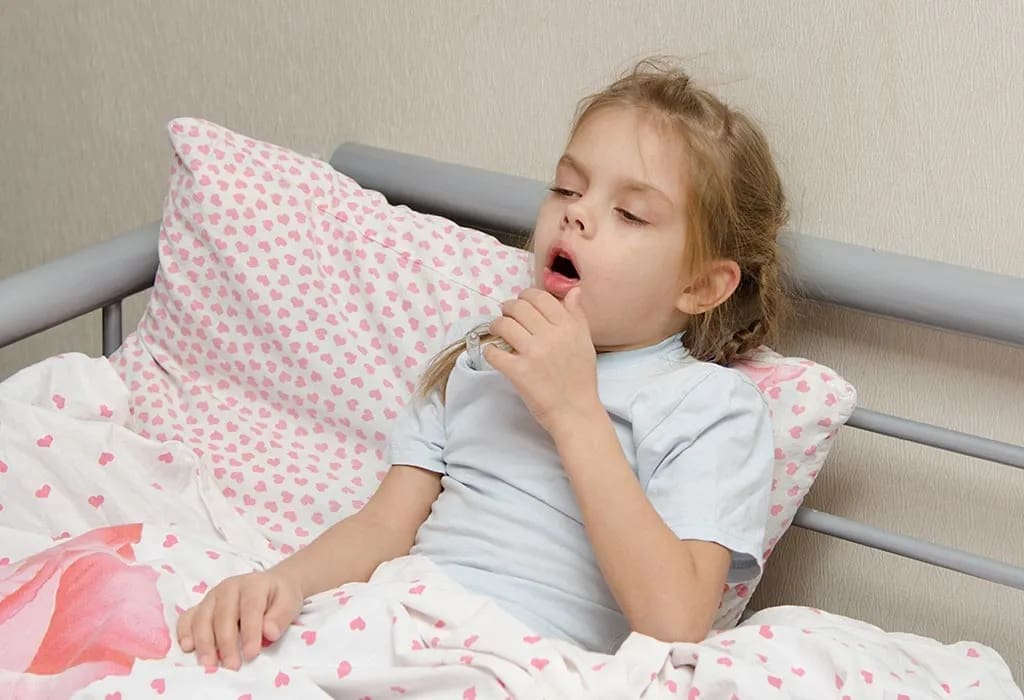
Seasonal allergies are one of the most common conditions we see in children — especially this time of year.
Across our clinics in Aldie (Stone Ridge), Manassas, and Winchester, we’re seeing more kids come in with congestion, sneezing, itchy eyes, and symptoms that seem to linger longer than expected.
For many families, it can feel confusing. Symptoms come and go, don’t fully resolve, and often look like a cold.To help you better understand what’s going on, here are five things many parents don’t realize about kids’ seasonal allergies.
1. Allergies can trigger asthma flare-ups
If your child has asthma, there’s a strong chance that allergies are playing a role.
In fact, many children with asthma also have environmental allergies that can trigger symptoms like coughing, wheezing, and shortness of breath. This is especially common during seasonal changes when pollen levels are higher.
That’s why breathing symptoms may seem worse when allergy symptoms are also present — and why early management matters.
2. Waiting for symptoms to start can make them harder to control
Many allergy treatments are designed to prevent symptoms, not just treat them after they begin.
If your child tends to have seasonal allergies every year, starting treatment early — before symptoms peak — can help reduce how severe they become.
This is something many parents don’t realize until symptoms are already in full swing.
3. Not all home remedies work the way you think
You may have heard that local honey can help with allergies.
While honey is safe for children over 1 year old and can soothe a cough, there’s no consistent evidence that it prevents or treats seasonal allergies.
It’s fine to use as a comfort measure — just not as a primary solution for allergy symptoms.
4. Pollen counts don’t tell the whole story
Checking the pollen count can be helpful, but it doesn’t always explain your child’s symptoms.
Different children react to different types of pollen — like tree, grass, or weed pollen — and most reports only show a general overall level.
That’s why some kids may have significant symptoms even when the pollen count doesn’t seem especially high.
5. There are more treatment options than you might think
For some children — especially those with persistent or more severe symptoms — there are additional options beyond basic allergy medications.
These may include targeted treatments or allergy-specific therapies, depending on your child’s age, symptoms, and triggers.
The right approach varies for each child, which is why getting the right evaluation can make a difference.
What this means for parents
If your child’s symptoms are lingering, worsening, or not responding the way you expected, you’re not alone.
We’re seeing a lot of this right now.
Sometimes it’s straightforward seasonal allergies. Other times, symptoms may overlap with other conditions.
Either way, getting clarity can help guide the right next steps and help your child feel better sooner.
Allergy care at Night Watch Urgent Care
At Night Watch Urgent Care, we evaluate and treat seasonal allergies and related symptoms in children across Northern Virginia.
We help determine what’s causing your child’s symptoms and recommend the next steps — whether that’s supportive care, symptom management, or further evaluation.
We’re open every day, including evenings and weekends, so you don’t have to wait while symptoms linger.
Seasonal allergies can be frustrating — especially when symptoms don’t go away as expected.
If you’re unsure what’s normal or what to do next, it’s always okay to have your child evaluated.
CATEGORY
4/19/2026
POSTED
A quick update from our clinics
Allergies are everywhere right now.
Over the past week, we’ve been seeing a steady flow of kids coming into our clinics in Aldie (Stone Ridge), Manassas, and Winchester with the same pattern of symptoms.
It’s not the typical “gets better in a few days” kind of illness.
It lingers.
And that’s what’s making it confusing for a lot of families.
What we’re seeing in clinic
Most kids we’re seeing right now are coming in with:
- Congestion that won’t go away
- Frequent sneezing
- Runny nose that keeps coming back
- Itchy or watery eyes
- Red, irritated eyes (often mistaken for pink eye)
- A cough that’s worse at night
For many parents, it starts off feeling like a simple cold. But after a few days, it doesn’t improve the way they expected.
Instead of getting better, symptoms just stay — or fluctuate throughout the day.
That’s been one of the biggest patterns we’re seeing.
Why symptoms are worse right now
This is very typical for this time of year in Northern Virginia.
Pollen levels are rising, the weather keeps shifting, and allergens are more active — especially outdoors.
Even children who don’t usually have strong allergies can start showing symptoms when exposure increases.
And because allergy symptoms can overlap with colds, it’s easy to misread what’s going on.
When it’s more likely allergies
There’s no single symptom that confirms it, but there are a few patterns we’re seeing consistently right now.
Symptoms that linger beyond a few days, come and go, or seem worse in the morning or after being outside are often allergy-related.
Itching is another big clue — especially itchy eyes, nose, or throat — which isn’t as common with viral illnesses.Most of the time, the discharge is also clear rather than thick, and kids may seem uncomfortable but otherwise okay.
What to do next
Not every case needs immediate treatment, but getting clarity can help a lot.
If your child’s symptoms aren’t improving, are affecting sleep, or just don’t feel typical for them, it’s reasonable to have them evaluated.
Sometimes it’s simply confirming that it’s allergies and guiding you on what will help. Other times, it helps rule out something else.
Either way, it takes the guesswork out of it.
Allergy care at Night Watch Urgent Care
At Night Watch Urgent Care, we’re seeing and treating seasonal allergies in children every day right now.
We help families understand what’s causing their child’s symptoms and recommend the right next steps — whether that’s supportive care, allergy management, or further evaluation.We’re open every day, including evenings and weekends, so you don’t have to wait while symptoms linger.
CATEGORY
3/01/2026
POSTED
How to Prevent Dehydration and Know When to Seek Care
A stomach bug, also called gastroenteritis, is a common illness that causes vomiting, diarrhea, stomach cramps, and sometimes fever. It’s usually caused by a virus and typically lasts a few days.
Most children recover at home with rest and fluids. The biggest concern isn’t the virus itself — it’s dehydration from fluid loss.
Top Things to Know
- Stomach bugs cause vomiting and diarrhea, which can lead to fluid loss.
- Dehydration is the main risk in children.
- Most kids improve within a few days with proper hydration.
- Small, frequent fluids work better than large amounts at once.
- Severe dehydration requires medical care.
Signs & Symptoms
What Are the Signs of a Stomach Bug?
The most common symptoms include:
- Vomiting
- Diarrhea
- Nausea
- Belly cramps
- Fever
- Headache
- Fatigue
- Muscle aches
When kids vomit or have diarrhea, they lose fluids quickly. If those fluids aren’t replaced, dehydration can develop.

Why Hydration Matters
Dehydration happens when the body doesn’t have enough fluids to function properly. Young children are especially vulnerable because their bodies are smaller and lose fluids faster.
Early hydration helps:
- Prevent ER visits
- Shorten recovery time
- Reduce weakness and dizziness
- Lower complication risk
The goal is to replace fluids steadily — not all at once.
Treatment & Home Care
How Can I Keep My Child Hydrated?
If your child has mild symptoms, you can usually manage care at home.
Offer Small Amounts Frequently
Give small sips every 5–10 minutes. Large drinks can trigger more vomiting.
Use Oral Rehydration Solutions
Electrolyte drinks made for children replace fluids and salts lost through vomiting and diarrhea. Water alone may not be enough.
Try Frozen Options
Electrolyte popsicles or ice chips can be easier for some kids to tolerate.
Resume Food Slowly
Once vomiting improves, start with bland foods like toast, rice, applesauce, or crackers. Avoid fatty or greasy foods.
Avoid Sugary Drinks
Juice, soda, and sports drinks can worsen diarrhea.
Signs of Dehydration
Call your provider or seek evaluation if your child has:
- Very dry mouth or cracked lips
- No tears when crying
- Fewer wet diapers or bathroom trips
- Dark yellow urine
- Unusual sleepiness or low energy
- Dizziness or weakness
For babies, fewer than three wet diapers in 24 hours is concerning.
When Should I Seek Care Right Away?
Seek urgent medical attention if your child:
- Cannot keep fluids down
- Has blood in vomit or stool
- Has severe abdominal pain
- Shows signs of significant dehydration
- Has a high fever that doesn’t improve
- Is difficult to wake or unusually confused
If you’re unsure whether it’s serious, it’s always safer to have your child evaluated.
Stomach Bug & Dehydration Care in Stone Ridge
If your child has vomiting, diarrhea, or signs of dehydration and you’re searching for urgent care in Stone Ridge for stomach bug symptoms, Night Watch Urgent Care is here to help. Our Stone Ridge team regularly evaluates children for gastroenteritis, dehydration, and related concerns. We can assess hydration levels, provide anti-nausea treatment when appropriate, and administer IV fluids if needed.
We’re open evenings and weekends when pediatric offices are closed.
📍 42010 Village Center Plaza, Suite 100
📞 (703) 775-4999
CATEGORY
2/22/2026
POSTED
When your child is sick or hurt, the best place to go depends on two things: how severe the symptoms are and how fast your child needs to be evaluated. If you’re seeing emergency warning signs (trouble breathing, severe allergic reaction, seizure, or a child who is hard to wake), skip the debate and go straight to the ER or call your local emergency number.
Below is a practical, parent-friendly guide to help you decide.
Choose the ER if your child may be in danger right now or could worsen quickly.
Choose Urgent Care if your child needs same-day evaluation for a non-life-threatening problem (especially when your pediatrician is closed or can’t see you soon).
Choose the Pediatrician for routine care, ongoing concerns, and problems that can safely wait for an office visit.
If you’re unsure, many urgent care clinics also offer telemedicine or nurse/triage guidance—but if your gut says “this is an emergency,” trust that and go to the ER.
Go to the ER now (or call emergency services) if…
These are red-flag symptoms that should be treated as emergencies:
- Trouble breathing, fast breathing, ribs pulling in with breaths, blue/gray lips or face.
- Severe allergic reaction: facial/lip/tongue swelling, trouble breathing, widespread hives with vomiting or dizziness.
- Seizure, fainting, or your child is very hard to wake/confused.
- Head injury with loss of consciousness, repeated vomiting, worsening headache, or unusual behavior.
- Severe bleeding that won’t stop with firm pressure.
- Suspected broken bone with deformity (bone looks out of place), severe pain, or numbness/tingling.
- Severe dehydration: no urine for 8–12 hours, very dry mouth, no tears, lethargy, or sunken eyes (especially in babies).
- Fever in a baby under 3 months (or any infant who looks very ill).
- Poisoning/ingestion (medications, chemicals, unknown substances), or concern for overdose.
- Severe abdominal pain, especially with a hard belly, persistent vomiting, or pain in the lower right abdomen.
- Any situation where you feel your child is not safe to wait.
Urgent Care is usually best for…
Urgent care is a strong option when your child needs prompt care but is stable.
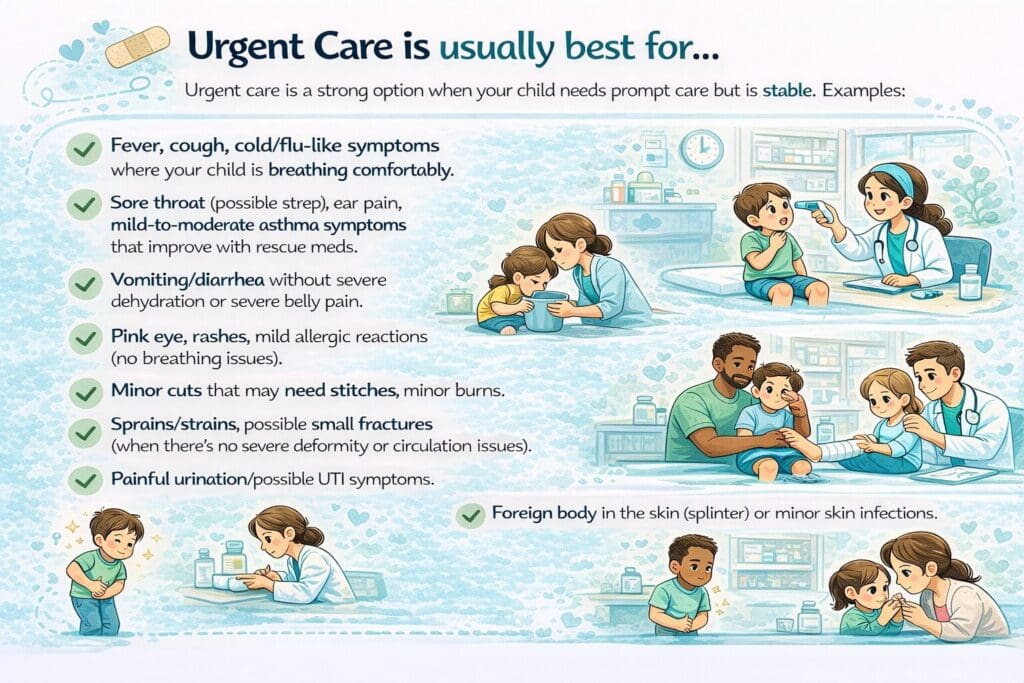
Why parents choose urgent care: Urgent care is a go-to option when you need your child seen the same day but your pediatrician is fully booked. Many urgent care clinics can also provide on-site testing, like rapid strep, flu, or COVID tests, and may offer X-rays, which can speed up answers and treatment decisions. It’s also especially helpful during evenings and weekends when your pediatrician’s office is closed, so you’re not forced to wait until the next business day.
Your Pediatrician is best for… Your child’s pediatrician should be your home base for routine and long-term care, including well visits, vaccines, and growth and developmental check-ins. They’re also the best fit for ongoing or recurring concerns, like asthma management plans, eczema, constipation, and repeated ear infections, because they can follow patterns over time and adjust care as your child grows. Pediatricians are ideal for behavior and sleep concerns, school-related issues, anxiety, and ADHD evaluations, and they’re a great choice when symptoms are mild, improving, and safe to wait for an appointment. They should also handle follow-ups after urgent care or ER visits to make sure your child is recovering well and to coordinate next steps if anything needs closer monitoring. Why it matters: your pediatrician knows your child’s history, tracks progress across multiple visits, and can coordinate referrals to specialists when needed.
Common scenarios (where to go)
1) Ear pain + low fever
- Usually urgent care or pediatrician (same/next day).
- ER only if severe swelling behind the ear, stiff neck, extreme lethargy, or severe dehydration.
2) Sore throat + fever
- Urgent care or pediatrician for strep testing and guidance.
- ER if trouble breathing, drooling with inability to swallow, or signs of dehydration.
3) Asthma/wheezing
- Urgent care if mild–moderate and improving with rescue inhaler.
- ER if your child is struggling to breathe, can’t speak in full sentences (age-appropriate), lips look bluish, or rescue meds aren’t helping.
4) Cut on the face
- Urgent care is often ideal, especially if it needs stitches and it’s within a few hours of the injury.
- ER if bleeding won’t stop, the wound is deep with visible fat/muscle, or there’s concern for a head injury.
5) Head bump after a fall
- Urgent care if your child is acting normal and symptoms are mild.
- ER for loss of consciousness, repeated vomiting, worsening headache, confusion, seizure, or very abnormal sleepiness.
If you’re stuck between urgent care and the ER, choose the safer option—especially for breathing problems, dehydration, head injuries, or very young infants. And if you’re deciding between urgent care and the pediatrician, urgent care makes sense when you can’t get a timely appointment or symptoms are worsening.
Need care today? Walk in to Night Watch Urgent Care in Manassas at 11700 Sudley Manor Dr, Manassas, VA 20109, or call (703) 589-9695 to check wait times and options.