

blog spot
THE
health hub
A collection of helpful articles & information to spread awareness through education from our staff to you

CATEGORY
2/22/2026
POSTED
One of the most common questions healthcare providers hear is:
“How often should I actually get tested for STIs?”
The answer isn’t one-size-fits-all but it is simpler than most people expect.
At Night Watch Urgent Care in Aldie, many adults come in for STI testing not because something feels wrong, but because they want reassurance, responsibility, and clarity. Regular testing is a normal part of preventive healthcare, especially when life, relationships, or routines change.
This guide explains how often to test, why timing matters, and how same-day results make testing easier for busy Aldie residents.
The Simple Rule: Yearly or After a New Partner
For most sexually active adults, medical guidelines recommend STI testing at least once a year.
However, testing is also strongly recommended:
- After a new sexual partner
- Between partners
- If you or your partner have multiple partners
- If a partner tests positive
- If you’ve had unprotected sex, even once
Many STIs do not cause immediate symptoms. Testing based on time and exposure, not symptom, is what protects long-term health.
Why Waiting for Symptoms Isn’t Enough
A common misconception is that STI testing is only necessary when something feels wrong. In reality, most common STIs are often silent, especially early on.
- Chlamydia and gonorrhea frequently cause no symptoms
- Syphilis may cause a painless sore that’s easy to miss
- Early HIV infection can feel like a mild flu — or nothing at all
By the time symptoms appear, complications may already be developing. Regular testing catches infections early, when treatment is simplest and outcomes are best.
How Relationship Changes Affect Testing Frequency
Testing frequency should adjust with your life — not just your age.
You should consider testing more often than once a year if you:
- Have a new partner
- Are dating or using apps
- Are in an open or non-monogamous relationship
- Travel frequently for work or leisure
- Want reassurance before stopping condom use with a partner
Healthcare providers often recommend testing every 3–6 months for individuals with higher exposure risk.
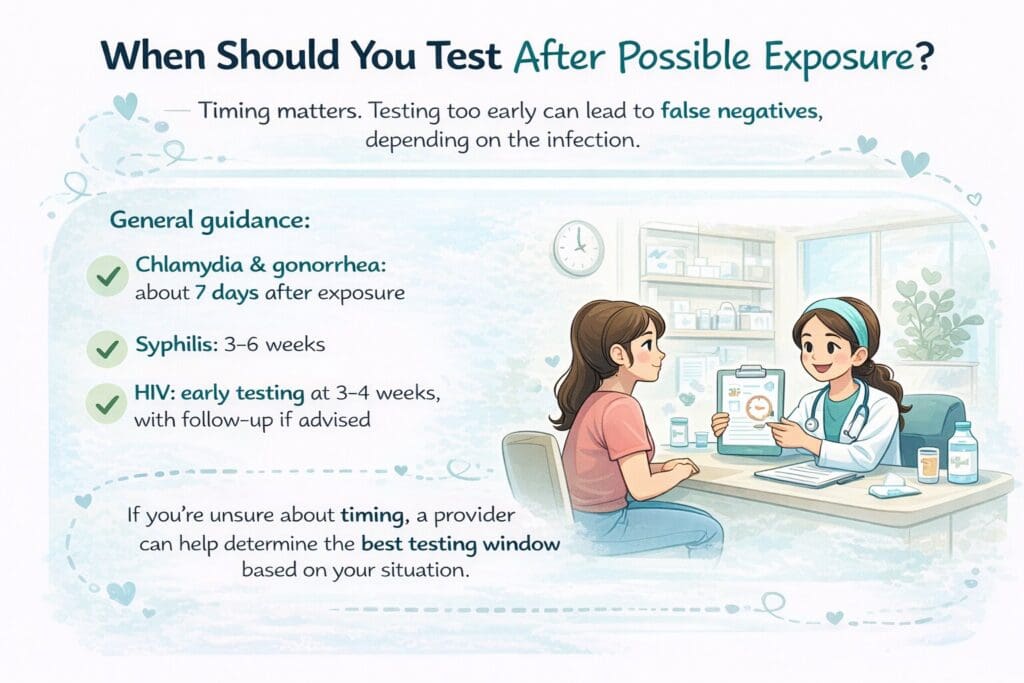
Why Aldie Adults Choose Same-Day STI Testing
Traditional lab testing often means waiting several days, sometimes a full week for results. For many people, that waiting period causes unnecessary stress. Rapid STI testing provides same-day answers, often within minutes.
Many Aldie patients test during evenings or weekends, fitting care into real life — not the other way around.
What Testing Looks Like (and What It Doesn’t)
STI testing is usually quick and straightforward:
- Urine sample or swab for chlamydia and gonorrhea
- Finger-prick blood test for HIV and syphilis
- Results available the same visit in many cases
Testing does not require:
- Symptoms
- An exam unless medically indicated
- Explaining your personal life in detail
Confidentiality is protected under Virginia law, and care is provided without judgment.
Making STI Testing Part of Routine Healthcare
STI testing doesn’t have to be reactive. Many Aldie adults now treat it like:
- Annual physicals
- Dental cleanings
- Routine blood work
It’s a normal, responsible step, especially for people who value their long-term health and their partners’ wellbeing.
If you’re due for yearly testing, have a new partner, or just want peace of mind, same-day STI testing is available locally.
CATEGORY
2/16/2026
POSTED
Recent public health reports confirm that measles cases are increasing again in parts of the United States. While outbreaks may not be widespread in every region, the virus’s ability to spread rapidly makes vaccination status an important topic for families in Aldie.
The most effective protection remains full immunization with the MMR vaccine.
Understanding the Risk
Measles spreads through the air and can infect individuals who were never in direct contact with a sick person. Because symptoms initially resemble a routine viral illness, measles can circulate for days before being identified.
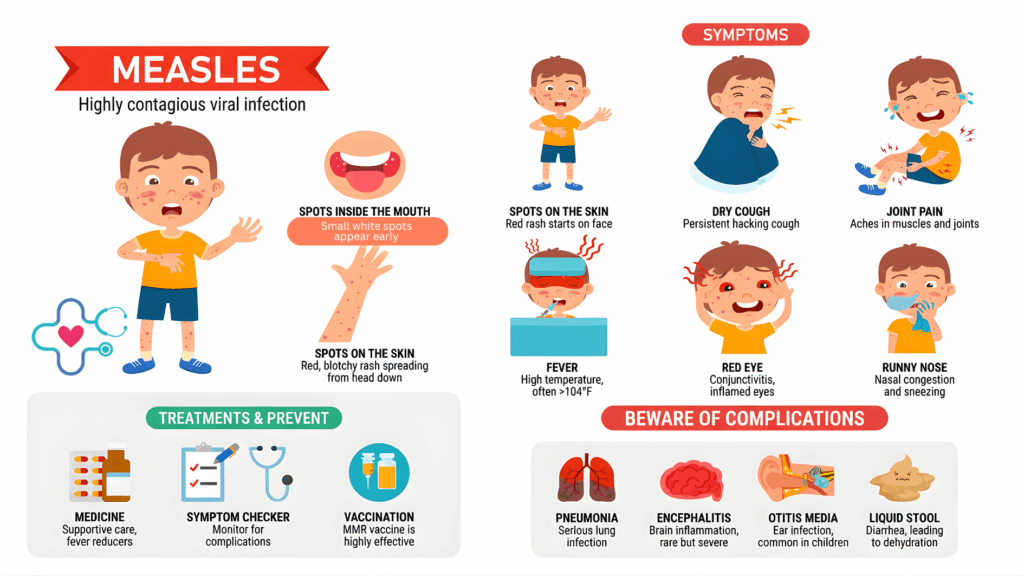
Early symptoms often include high fever, cough, runny nose, and red eyes. The rash appears later. By that point, a child may already have exposed others.
Although many children recover, complications can include pneumonia, dehydration, ear infections, and in rare cases, brain inflammation. Hospitalization is not uncommon in outbreak settings.
These risks are significantly reduced in vaccinated children.
It is common for parents to have questions about vaccine safety. The MMR vaccine has been extensively studied worldwide and continues to be monitored for safety. Side effects are generally mild and temporary, such as soreness at the injection site or a low-grade fever.
If you have concerns, discussing them with a pediatric provider allows for informed decision-making based on evidence rather than misinformation.
If your child is due for an MMR vaccine in Aldie, now is the time to confirm protection.
How Effective Is the MMR Vaccine?
The MMR vaccine protects against measles, mumps, and rubella. For measles specifically:
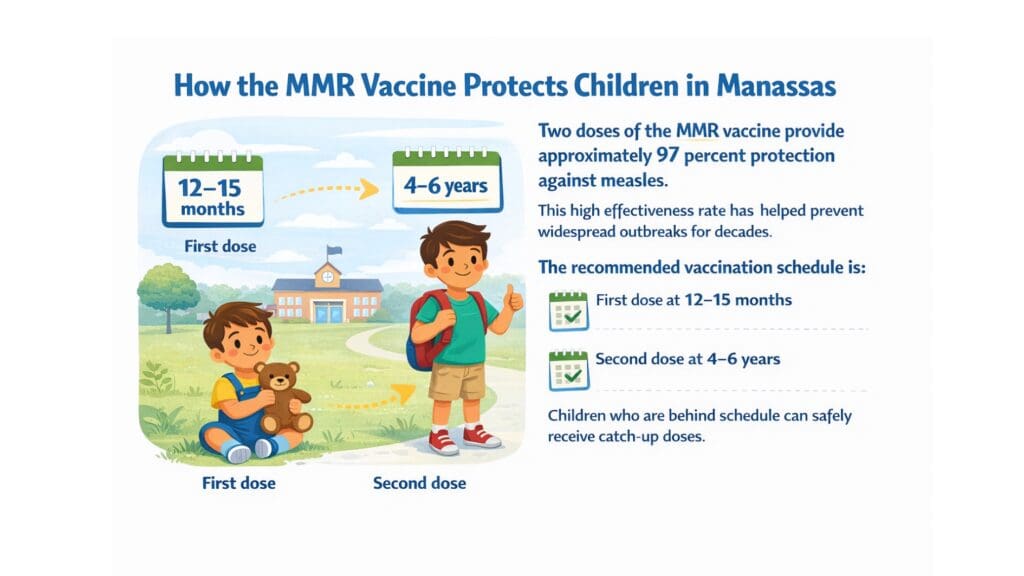
• One dose is approximately 93 percent effective
• Two doses are approximately 97 percent effective
That level of protection is considered extremely strong in preventive medicine. For most children who receive both recommended doses, immunity is long-lasting.
The standard schedule recommended by the CDC is:
• First dose between 12 and 15 months
• Second dose between 4 and 6 years
If your child has received both doses, they are highly protected. If you are unsure, this is the time to review records.
Is the Measles (MMR) Vaccine Safe for Children?
Safety is often the first concern for families in Aldie considering immunizations. The MMR vaccine is one of the most extensively studied vaccines in pediatric medicine.
Before approval, vaccines must pass through:
• Pre-clinical laboratory testing
• Phase 1, 2, and 3 clinical trials
• FDA review
• Ongoing post-licensure monitoring
Even after decades of use, safety monitoring continues through national reporting systems.
The vast majority of children tolerate the MMR vaccine without issue. When side effects occur, they are generally mild and short-lived, including:
• Temporary soreness at the injection site
• Low-grade fever
• Mild rash
Severe allergic reactions are extremely rare.
Extensive research has shown no association between the MMR vaccine and autism. Multiple international studies have confirmed its safety profile.
From a medical standpoint, the risk of measles infection — including complications like pneumonia or encephalitis — far outweighs the risk of vaccine side effects.
For families searching for the measles vaccine in Aldie VA, understanding the safety data can provide reassurance and confidence in your decision.
👉 Call today to schedule your child’s measles vaccine in Aldie.
Prevention remains far simpler than treatment.
CATEGORY
2/16/2026
POSTED
Life in Aldie moves fast. Between work schedules, travel, relationships, and social plans, health concerns often get pushed to the bottom of the list—especially when nothing feels wrong.
But when it comes to sexually transmitted infections (STIs), feeling fine doesn’t always mean being fine.
In fact, studies show that up to 80% of common STIs cause no symptoms in their early stages, particularly infections like chlamydia and gonorrhea. These “silent” infections can spread quietly and lead to long-term health issues if left untreated.
At Night Watch Urgent Care in Aldie, adults walk in every week for discreet, rapid STI testing—not because they feel sick, but because they want clarity, peace of mind, and prevention.
This guide explains why silent STIs are common in Northern Virginia, how rapid testing works, and when it makes sense to get checked.
The Silent Spread in Aldie and Northern Virginia
Virginia continues to report high chlamydia rates—approximately 480 cases per 100,000 residents, with the highest concentration among adults aged 18–34. That age group makes up a significant portion of Aldie’s growing population of young professionals and couples.
Social gatherings, work travel, dating apps, and busy lifestyles all increase exposure risk—even for people who consider themselves careful.
One of the biggest misconceptions about STIs is that they always come with obvious warning signs. In reality:
- Up to 90% of chlamydia and gonorrhea cases begin without symptoms
- Early syphilis may cause a painless sore that’s easy to miss
- HIV can feel like a mild flu—or nothing at all—in early stages
Without testing, infections can persist for months or years.
Why “No Symptoms” Doesn’t Mean “No Risk”
When untreated, silent STIs can cause serious complications over time.
For women, risks include:
- Pelvic inflammatory disease (PID)
- Chronic pelvic pain
- Tubal scarring and infertility
- Increased risk during pregnancy
For men, complications may include:
- Epididymitis
- Prostate inflammation
- Fertility issues
Untreated syphilis can eventually affect the heart, brain, and nervous system, sometimes years after the initial infection.
At Night Watch Urgent Care, providers regularly see patients who had no symptoms but tested positive during routine screening—and were able to receive treatment immediately.
Real Aldie scenario:
A 29-year-old professional returned from a work trip feeling fine. No symptoms. A rapid test revealed chlamydia. Treatment was started the same visit, preventing long-term complications and further spread.
Why Symptoms Can Mislead — and Testing Doesn’t
STIs don’t spread only through penetrative sex. Oral, anal, and skin-to-skin contact can transmit infections, and while condoms significantly reduce risk, they don’t eliminate it—especially for herpes, HPV, and syphilis.
The most common silent infections include:
- Chlamydia: The leading preventable cause of infertility in young adults
- Gonorrhea: Often symptom-free, especially in women
- Syphilis: Early signs are subtle but consequences can be severe
Medical guidelines recommend:
- Annual STI testing for sexually active adults
- Every 3–6 months for those with new or multiple partners
Testing is about prevention—not judgment.
Rapid STI Testing at Night Watch Urgent Care Aldie
Traditional lab testing often means waiting days for results. At Night Watch Urgent Care in Aldie, rapid STI testing delivers answers the same visit.
What to Expect
| Test | Sample | Results | Availability |
| Chlamydia / Gonorrhea | Urine or swab | 15–30 minutes | Walk-in daily |
| Syphilis / HIV | Finger-prick blood | ~20 minutes | Same visit |
| Full STI Panel | Combination | Same day | Evenings & weekends |
- Lab-level accuracy (≈97%)
- Fully confidential under Virginia privacy laws
- Insurance accepted; affordable self-pay options available
- Treatment often started immediately if positive
Most tests involve either a urine sample or a quick swab—no invasive procedures.
Why Aldie Adults Choose to Test Early
In Northern Virginia, providers frequently see STI-related issues disguised as other concerns:
- Recurrent UTIs
- Pelvic discomfort
- Joint pain
- Fatigue
- Fertility struggles
Another real case:
A patient returned from vacation with mild pelvic discomfort. Rapid testing revealed gonorrhea—caught early and treated the same day.
Infertility remains one of the most preventable consequences of untreated chlamydia. Early detection makes all the difference.
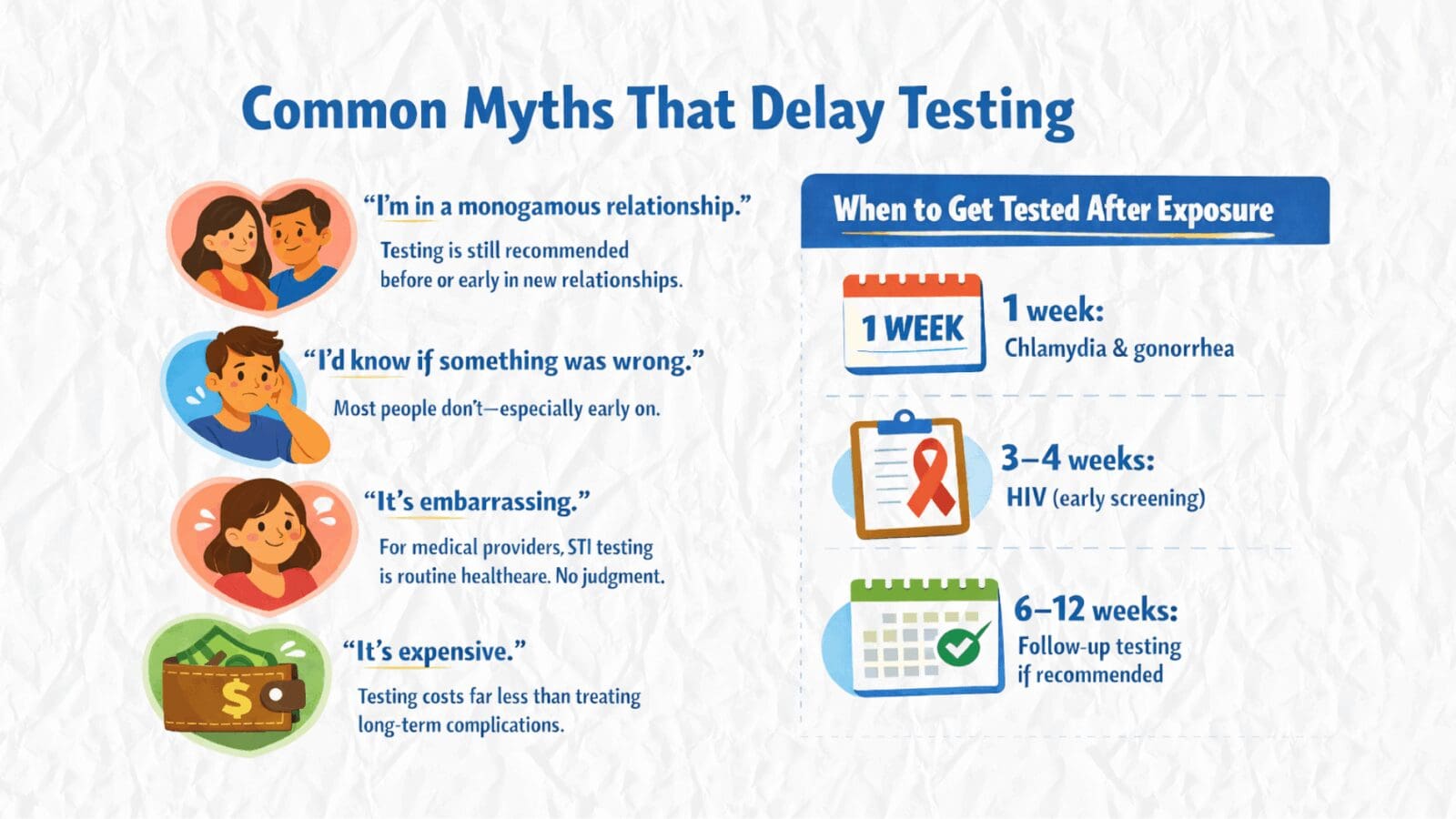
If you’ve been wondering whether testing makes sense, it probably does. We’re open evenings and weekends when most offices are closed. Walk-ins welcome.
CATEGORY
2/06/2026
POSTED
easles is appearing in more communities across the U.S., and many parents are understandably concerned. While measles may feel like an illness from the past, it remains one of the most contagious viral infections affecting children today — and it often begins in a way that’s easy to miss.
At Night Watch Urgent Care, our pediatric team is hearing the same questions from families every day:
How does measles start? How worried should I be? And when should I bring my child in?
This guide is designed to give parents clear, practical information so you can recognize symptoms early, understand how measles spreads, and feel confident about next steps if your child becomes ill.
What Is Measles and Why Is It So Contagious?
Measles is a viral illness that spreads through the air when an infected person coughs, sneezes, or breathes. Unlike many other childhood viruses, measles does not require close contact to spread.
The virus can remain in the air for up to two hours after an infected person leaves a room, meaning exposure can occur in classrooms, daycare centers, grocery stores, or medical offices without direct interaction.
What makes measles especially challenging is that children are contagious before parents realize it’s measles. By the time the classic rash appears, the virus may have already spread to others.
This is why early recognition and prevention play such an important role in protecting families and communities.
Early Measles Symptoms Parents Often Miss
Many parents associate measles with a rash — but the rash comes later.
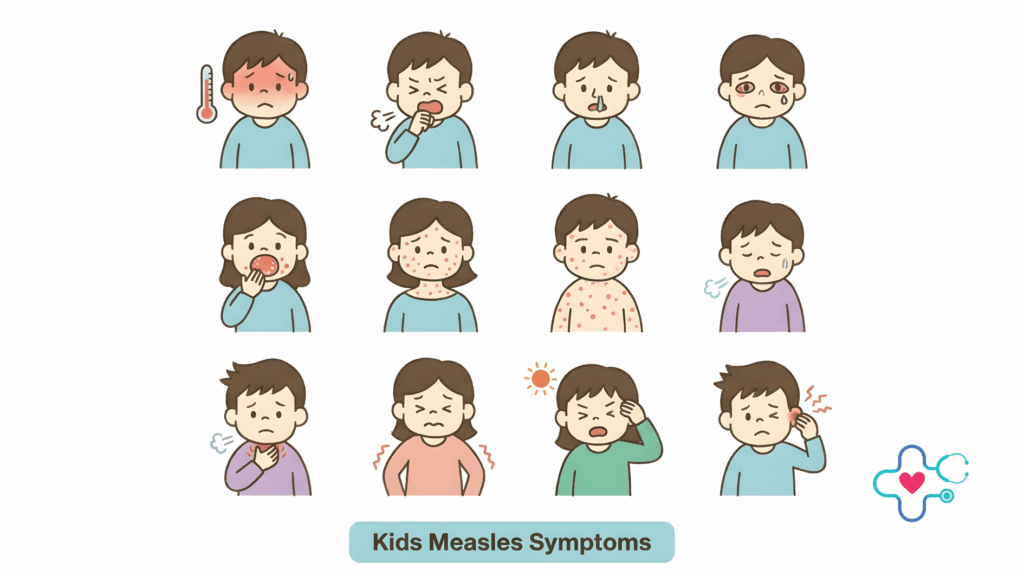
In the early stage, measles often looks like a severe cold or flu. Symptoms may include:
- High fever, often rising quickly
- Cough
- Runny nose
- Red, watery, or irritated eyes
- Fatigue, irritability, or decreased appetite
Because these symptoms are common with many viral illnesses, measles can be difficult to identify at first. A key difference parents often notice is how sick their child looks and feels, especially when fever is high and persistent.
When the Rash Appears
The measles rash typically develops three to five days after fever begins. It usually:
- Starts on the face or hairline
- Spreads downward to the neck, trunk, arms, and legs
- Appears as flat red spots that may merge together
If your child develops fever followed by a spreading rash, or symptoms seem to worsen instead of improve, it’s important to contact a medical provider.
Why Measles Can Be Serious for Children
While many children recover from measles, it is not always a mild illness. Some children are at higher risk for complications, including:
- Infants under 12 months
- Children who are not fully vaccinated
- Children with asthma or chronic medical conditions
- Pregnant individuals and immunocompromised family members
Complications can include ear infections, dehydration, pneumonia, and in rare cases, serious neurologic issues. This is why prompt guidance and careful monitoring are important, even if symptoms seem manageable at first.
How Parents Can Protect Their Children From Measles
MMR Vaccination
The MMR (measles, mumps, rubella) vaccine is the most effective way to prevent measles. Two doses provide strong, long-lasting protection and significantly reduce the risk of severe illness and complications.
If you’re unsure whether your child is up to date on vaccinations or have questions about timing, a pediatric provider can help review your child’s immunization history and answer concerns.
Reducing Exposure
During times of increased measles activity:
- Avoid close contact with anyone who has fever and rash symptoms
- Be cautious in crowded indoor settings when possible
- Notify your healthcare provider if your child may have been exposed
Protecting High-Risk Family Members
If your household includes infants, pregnant individuals, or people with weakened immune systems, extra care is important. Keeping eligible family members vaccinated and limiting exposure to illness helps protect those most vulnerable.
When to Call Before Coming In
Because measles spreads so easily, calling ahead before visiting urgent care is essential.
Please contact a medical provider first if your child has:
- Fever along with a rash
- Known exposure to someone with measles
- Symptoms and is not fully vaccinated
Calling ahead allows our team to prepare appropriately and helps protect other children and families in our care.
Seek urgent or emergency care immediately if your child experiences:
- Trouble breathing or fast, labored breathing
- Extreme sleepiness, confusion, or difficulty staying awake
- Signs of dehydration such as very dry mouth, no tears, or minimal urination
- A very high fever that does not respond to medication
You never have to make these decisions alone. We are always here to help guide you.
Families looking for measles care in Stone Ridge can rely on Night Watch Urgent Care for pediatric-focused evaluation and guidance.
Our Stone Ridge location offers evening and weekend hours, making it easier for parents to seek care when pediatric offices are closed. Our team focuses on careful assessment, clear communication, and helping families understand next steps.