

blog spot
THE
health hub
A collection of helpful articles & information to spread awareness through education from our staff to you

CATEGORY
2/22/2026
POSTED
One of the most common questions healthcare providers hear is:
“How often should I actually get tested for STIs?”
The answer isn’t one-size-fits-all but it is simpler than most people expect.
At Night Watch Urgent Care in Aldie, many adults come in for STI testing not because something feels wrong, but because they want reassurance, responsibility, and clarity. Regular testing is a normal part of preventive healthcare, especially when life, relationships, or routines change.
This guide explains how often to test, why timing matters, and how same-day results make testing easier for busy Aldie residents.
The Simple Rule: Yearly or After a New Partner
For most sexually active adults, medical guidelines recommend STI testing at least once a year.
However, testing is also strongly recommended:
- After a new sexual partner
- Between partners
- If you or your partner have multiple partners
- If a partner tests positive
- If you’ve had unprotected sex, even once
Many STIs do not cause immediate symptoms. Testing based on time and exposure, not symptom, is what protects long-term health.
Why Waiting for Symptoms Isn’t Enough
A common misconception is that STI testing is only necessary when something feels wrong. In reality, most common STIs are often silent, especially early on.
- Chlamydia and gonorrhea frequently cause no symptoms
- Syphilis may cause a painless sore that’s easy to miss
- Early HIV infection can feel like a mild flu — or nothing at all
By the time symptoms appear, complications may already be developing. Regular testing catches infections early, when treatment is simplest and outcomes are best.
How Relationship Changes Affect Testing Frequency
Testing frequency should adjust with your life — not just your age.
You should consider testing more often than once a year if you:
- Have a new partner
- Are dating or using apps
- Are in an open or non-monogamous relationship
- Travel frequently for work or leisure
- Want reassurance before stopping condom use with a partner
Healthcare providers often recommend testing every 3–6 months for individuals with higher exposure risk.
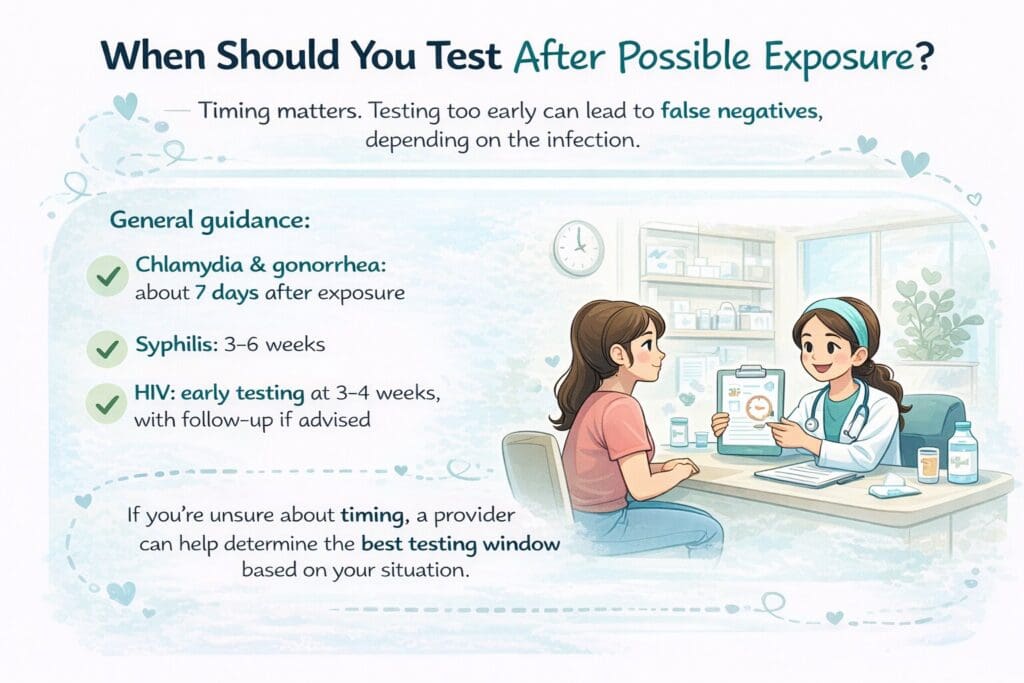
Why Aldie Adults Choose Same-Day STI Testing
Traditional lab testing often means waiting several days, sometimes a full week for results. For many people, that waiting period causes unnecessary stress. Rapid STI testing provides same-day answers, often within minutes.
Many Aldie patients test during evenings or weekends, fitting care into real life — not the other way around.
What Testing Looks Like (and What It Doesn’t)
STI testing is usually quick and straightforward:
- Urine sample or swab for chlamydia and gonorrhea
- Finger-prick blood test for HIV and syphilis
- Results available the same visit in many cases
Testing does not require:
- Symptoms
- An exam unless medically indicated
- Explaining your personal life in detail
Confidentiality is protected under Virginia law, and care is provided without judgment.
Making STI Testing Part of Routine Healthcare
STI testing doesn’t have to be reactive. Many Aldie adults now treat it like:
- Annual physicals
- Dental cleanings
- Routine blood work
It’s a normal, responsible step, especially for people who value their long-term health and their partners’ wellbeing.
If you’re due for yearly testing, have a new partner, or just want peace of mind, same-day STI testing is available locally.
CATEGORY
2/16/2026
POSTED
Life in Aldie moves fast. Between work schedules, travel, relationships, and social plans, health concerns often get pushed to the bottom of the list—especially when nothing feels wrong.
But when it comes to sexually transmitted infections (STIs), feeling fine doesn’t always mean being fine.
In fact, studies show that up to 80% of common STIs cause no symptoms in their early stages, particularly infections like chlamydia and gonorrhea. These “silent” infections can spread quietly and lead to long-term health issues if left untreated.
At Night Watch Urgent Care in Aldie, adults walk in every week for discreet, rapid STI testing—not because they feel sick, but because they want clarity, peace of mind, and prevention.
This guide explains why silent STIs are common in Northern Virginia, how rapid testing works, and when it makes sense to get checked.
The Silent Spread in Aldie and Northern Virginia
Virginia continues to report high chlamydia rates—approximately 480 cases per 100,000 residents, with the highest concentration among adults aged 18–34. That age group makes up a significant portion of Aldie’s growing population of young professionals and couples.
Social gatherings, work travel, dating apps, and busy lifestyles all increase exposure risk—even for people who consider themselves careful.
One of the biggest misconceptions about STIs is that they always come with obvious warning signs. In reality:
- Up to 90% of chlamydia and gonorrhea cases begin without symptoms
- Early syphilis may cause a painless sore that’s easy to miss
- HIV can feel like a mild flu—or nothing at all—in early stages
Without testing, infections can persist for months or years.
Why “No Symptoms” Doesn’t Mean “No Risk”
When untreated, silent STIs can cause serious complications over time.
For women, risks include:
- Pelvic inflammatory disease (PID)
- Chronic pelvic pain
- Tubal scarring and infertility
- Increased risk during pregnancy
For men, complications may include:
- Epididymitis
- Prostate inflammation
- Fertility issues
Untreated syphilis can eventually affect the heart, brain, and nervous system, sometimes years after the initial infection.
At Night Watch Urgent Care, providers regularly see patients who had no symptoms but tested positive during routine screening—and were able to receive treatment immediately.
Real Aldie scenario:
A 29-year-old professional returned from a work trip feeling fine. No symptoms. A rapid test revealed chlamydia. Treatment was started the same visit, preventing long-term complications and further spread.
Why Symptoms Can Mislead — and Testing Doesn’t
STIs don’t spread only through penetrative sex. Oral, anal, and skin-to-skin contact can transmit infections, and while condoms significantly reduce risk, they don’t eliminate it—especially for herpes, HPV, and syphilis.
The most common silent infections include:
- Chlamydia: The leading preventable cause of infertility in young adults
- Gonorrhea: Often symptom-free, especially in women
- Syphilis: Early signs are subtle but consequences can be severe
Medical guidelines recommend:
- Annual STI testing for sexually active adults
- Every 3–6 months for those with new or multiple partners
Testing is about prevention—not judgment.
Rapid STI Testing at Night Watch Urgent Care Aldie
Traditional lab testing often means waiting days for results. At Night Watch Urgent Care in Aldie, rapid STI testing delivers answers the same visit.
What to Expect
| Test | Sample | Results | Availability |
| Chlamydia / Gonorrhea | Urine or swab | 15–30 minutes | Walk-in daily |
| Syphilis / HIV | Finger-prick blood | ~20 minutes | Same visit |
| Full STI Panel | Combination | Same day | Evenings & weekends |
- Lab-level accuracy (≈97%)
- Fully confidential under Virginia privacy laws
- Insurance accepted; affordable self-pay options available
- Treatment often started immediately if positive
Most tests involve either a urine sample or a quick swab—no invasive procedures.
Why Aldie Adults Choose to Test Early
In Northern Virginia, providers frequently see STI-related issues disguised as other concerns:
- Recurrent UTIs
- Pelvic discomfort
- Joint pain
- Fatigue
- Fertility struggles
Another real case:
A patient returned from vacation with mild pelvic discomfort. Rapid testing revealed gonorrhea—caught early and treated the same day.
Infertility remains one of the most preventable consequences of untreated chlamydia. Early detection makes all the difference.
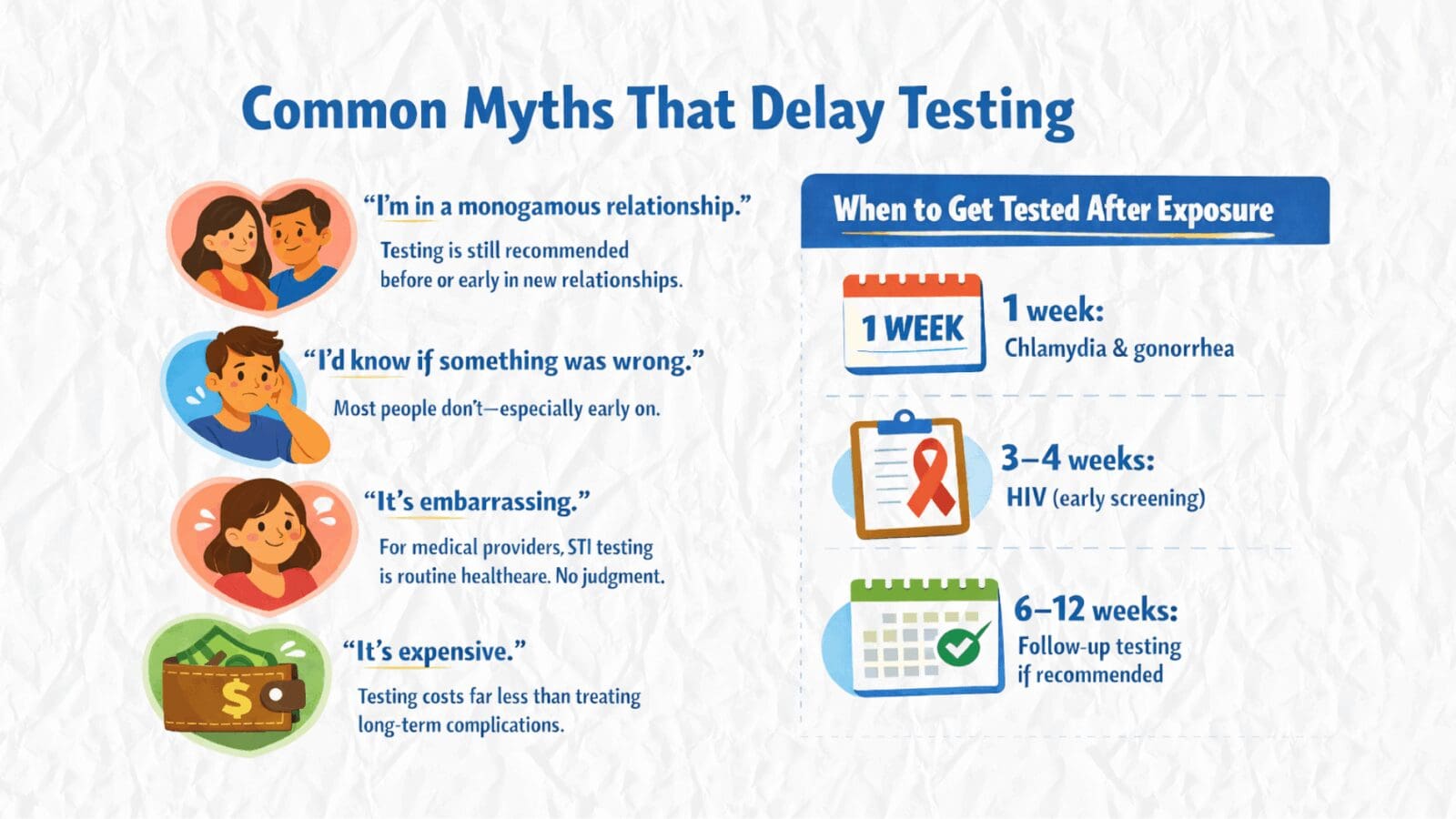
If you’ve been wondering whether testing makes sense, it probably does. We’re open evenings and weekends when most offices are closed. Walk-ins welcome.